Press Release SEO and GEO Are Different Channels in 2026
SEO ranks press release URLs in Google's index. GEO shapes whether ChatGPT, Perplexity, and Gemini cite the claims inside. They are different channels with different signals — and treating them as one breaks both.
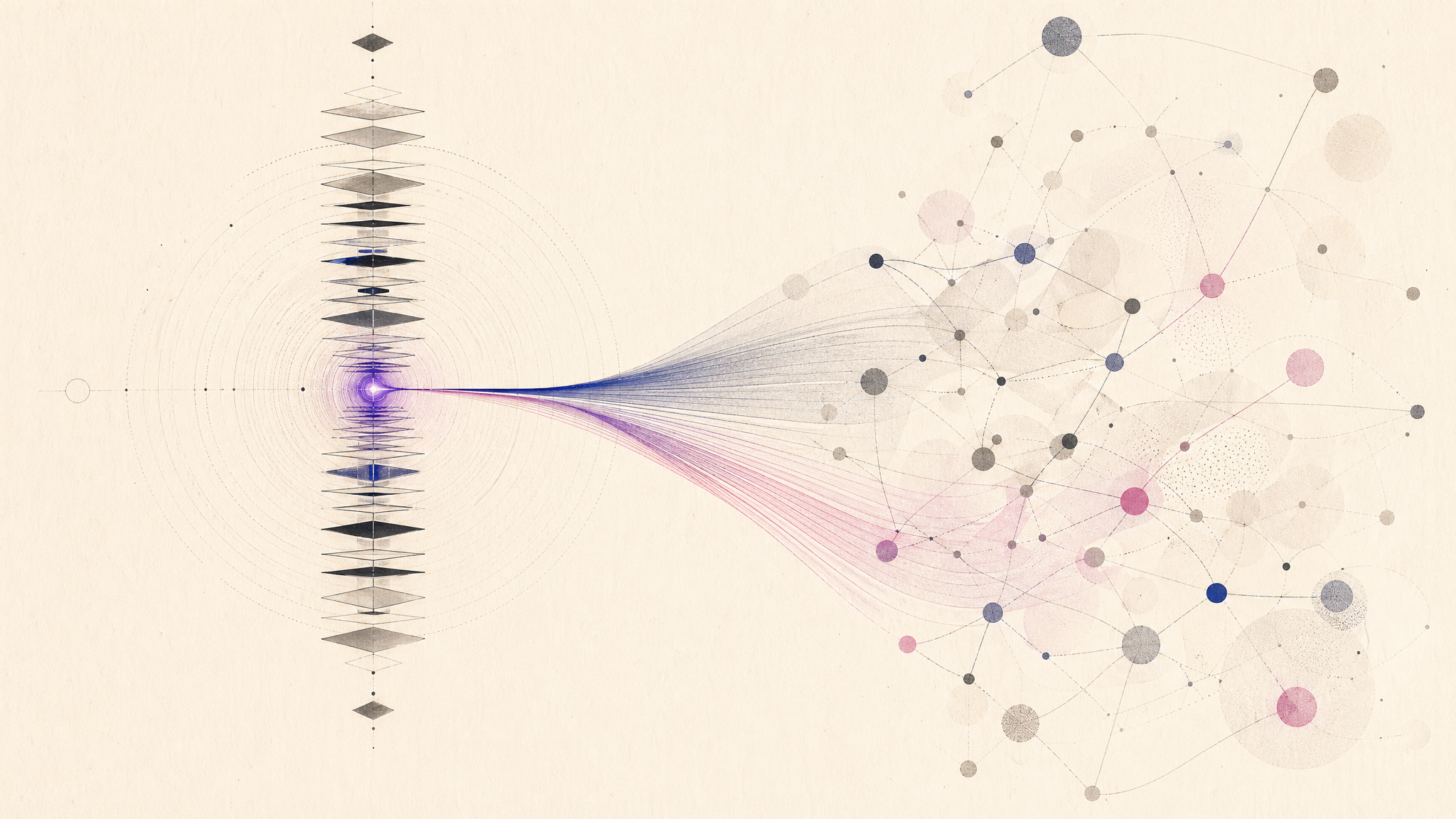
SEO and GEO optimize different things on the same press release: SEO ranks the document URL in Google's index and rewards backlinks plus freshness, while GEO determines whether AI engines like ChatGPT, Perplexity, and Gemini cite the claims inside the text when answering user questions. A release can hold a top-three Google rank for its announcement keyword and never appear in a single AI citation, or get pulled into Perplexity answers weekly while losing its SEO race to a syndicated wire copy. Treating them as one channel makes releases underperform on both — splitting them into two measurement dashboards exposes the diagnostic signals that actually move outcomes.
What SEO and GEO Actually Optimize For
SEO operates on documents. Google's ranking systems index a press release URL, evaluate its backlinks, the publisher's authority, the freshness of its content, and how well it matches the query. The unit of optimization is the page. Win the page-level competition and traffic follows.
GEO operates on claims and entities. The 2024 paper that formalized the term — GEO: Generative Engine Optimization — showed that visibility in generative engines responds to different signals than traditional rank. AI engines extract quotable fact units from text, attribute them to entities, and surface them inside synthesized answers. The unit of optimization is the sentence — sometimes the clause.
That difference is structural, not stylistic. A release engineered for backlinks (link-heavy, optimized for one anchor keyword) can be poor for AI extraction. A release engineered for AI citation (dense with attributable facts, named spokesperson, dated figures) can underperform on rank. "Just do good SEO and AI search will follow" misleads PR teams: the funnels share input — text on a page — but they reward different shapes of that text.
How ChatGPT, Perplexity, and Gemini Select Sources Differently
Perplexity's documentation describes its answer surface as inline numbered citations linking to consulted source pages. In practice, Perplexity is the most likely of the three to cite the original release URL — it surfaces primary sources when their structure is clean.
ChatGPT with web browsing cites sparingly. When it does, it tends to prefer high-authority publishers — Reuters, AP, Bloomberg, the Wall Street Journal — over the original release on a company newsroom. A release that gets pickup at a Tier-1 outlet often gets cited via that outlet, not via its own URL.
Gemini and Google AI Overviews — rolled out to general US Search users in May 2024 — sit on Google's existing index but apply a different extraction layer. That layer favors quotable, fact-dense passages with clear attribution. A release can rank well in classic Google and still lose the AI Overview slot to a lower-ranked page that is more cleanly structured.
The implication is uncomfortable: the same release distributed identically gets unequal pickup across engines, and "average AI visibility" is not a useful metric.
What KPIs Each Channel Actually Delivers
SEO deliverables for a press release are familiar — organic traffic to the release URL, backlinks earned in the 30 days post-publish, rank for the announcement query, and branded search lift. They peak in days and tail off within weeks.
GEO deliverables look different. Citation count in AI engines for the announcement question. Brand mention frequency in zero-click answers on entity-level queries ("who makes [product]"). Share of voice when the engine answers a category question relevant to the announcement. These can compound over months — or vanish suddenly when an engine retrains or recrawls.
This is why measuring GEO with Ahrefs or SEMrush misses the value. Rank trackers do not see Perplexity's citation panel. They do not see ChatGPT's source list. They do not see whether Gemini extracted your spokesperson quote into an AI Overview. The right instrument is direct prompting of the engines on a fixed schedule and logging what comes back.
Structural Changes a 2026 Release Needs
The structural fix is small but specific. First, schema.org's PressRelease type — a sub-type of NewsArticle — gives the document a structured-data signature both ranking systems and AI extraction layers can read:
{
  "@context": "https://schema.org",
  "@type": "PressRelease",
  "headline": "Acme Launches Carbon-Neutral Logistics Network in Three EU Markets",
  "datePublished": "2026-04-29",
  "author": {"@type": "Organization", "name": "Acme Corp"},
  "publisher": {"@type": "Organization", "name": "Acme Corp"},
  "mainEntityOfPage": "https://acme.com/news/2026-04-29-carbon-neutral"
}
Second, the lead paragraph must answer the news in 2-3 plain-prose sentences with no marketing setup. Compare:
- Before: "In an exciting development for the logistics industry, Acme Corp is thrilled to announce..."
- After: "Acme launched a carbon-neutral logistics network across France, Germany, and the Netherlands on April 29, 2026, replacing diesel last-mile delivery with electric vehicles in 14 distribution hubs. The rollout covers 2.3 million parcels per month and is the first of its kind among EU logistics operators with cross-border coverage."
The "after" version helps Google featured snippets, lets AI extractors quote it cleanly, and serves the journalist who wants the lede in one read. Same answer-first principle, three audiences served at once.
Third, every key fact gets a quotable, attributable unit: a dated stat, a named spokesperson, an exact figure. AI engines lift these verbatim when present. SEO rewards them through E-E-A-T signals.
Fourth, a stable canonical URL with a clear publish date. Both channels punish unclear authorship and shifting timestamps.
Where the Distribution Chain Breaks for Each Channel
Wire syndication via PR Newswire, Business Wire, or GlobeNewswire creates a duplicate-content pattern that complicates SEO canonicalization — the original release page on the company newsroom often loses rank to a wire copy on a high-authority distribution domain. The same syndication, however, helps GEO: a broader corpus of identically-claimed text on diverse domains gives AI engines more anchors to pull from on entity-level queries.
Embargo timing with exclusive placements concentrates SEO authority on one publisher (good for that publisher's rank, neutral for yours) but reduces the corpus diversity AI engines lean on. Run an exclusive with the WSJ and you may dominate that one outlet's rank — and disappear from Perplexity citations because no other source carried the announcement.
Newsroom-as-API patterns — structured feeds, persistent URLs, schema-rich pages, machine-readable contact metadata — serve both channels simultaneously. PDF-only releases serve neither: Google indexes them poorly and AI engines extract from them inconsistently.
A Split-Channel Measurement Framework
Track SEO and GEO as separate dashboards, not a unified score.
SEO dashboard: rank tracker on the announcement query and the entity name, referrer logs to the release URL filtered by source domain, backlink delta at 30 days post-release, branded search volume change.
GEO dashboard: weekly prompts sent to ChatGPT, Perplexity, and Gemini with the announcement question and the entity question. Log whether each engine cited the original release URL, a wire copy, a Tier-1 publisher, or no source at all. Track citation persistence at 4, 8, and 12 weeks.
The diagnostic signal worth chasing is the divergence. High SEO rank with zero AI citation usually means the release is link-heavy but quote-light, or the lead is marketing-shaped rather than answer-shaped. High AI citation with weak SEO usually means the release is cleanly structured but under-promoted to publishers.
That split is invisible if you collapse the channels. A 2026 PR program that wants to be seen by both human searchers and AI synthesis layers needs both views — and the willingness to optimize them separately. For teams designing this from the start, the release composer is built around exactly this split-channel structure.

Defne
Content Editor, Prfect